How a Retired Health Practitioner Helped Me Break Free From Addiction
Real stories about recovery, health and starting again
A Retired Health Practitioner Reveals a Simple Breakaway Method That Helps Men and Women Break Free From the Cycle of Alcohol Addiction
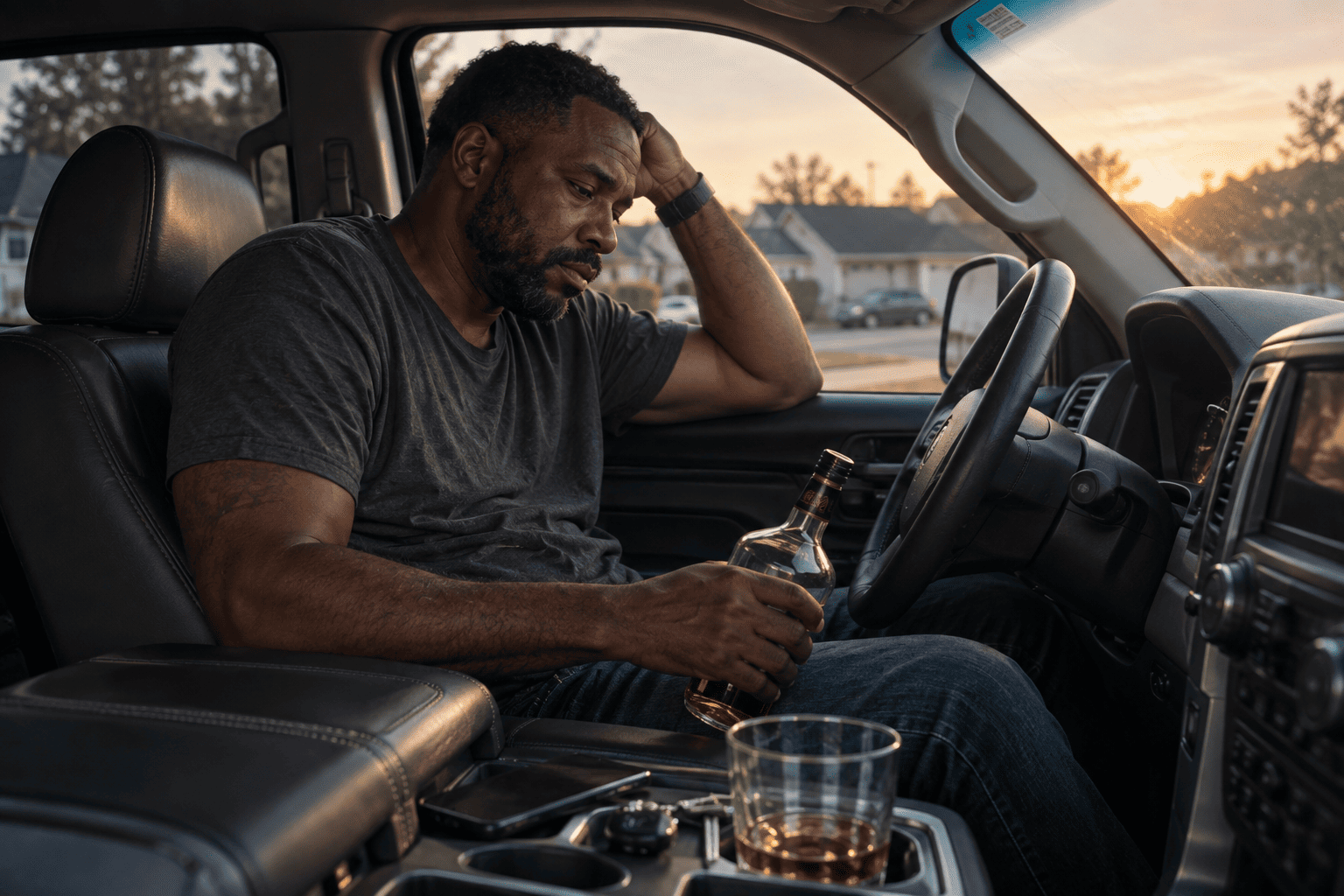
Maybe you know exactly what I mean.
You wake up in the morning and tell yourself that today will be different.
No drinking today.
You mean it too.
Then the day starts.
Work gets stressful. Somebody annoys you. A bill comes in. Your relationship feels tense. Maybe you are simply tired.
And somewhere in the back of your mind, that familiar thought appears.
“Just one drink. I deserve it.”
So you have one.
Then another.
And before you know it, the promise you made that morning has disappeared again.
Sometimes the worst part isn't even the drinking itself.
It is what happens afterwards.
You wake up wondering what you said.
Who did you call?
How much money did you spend?
Did your partner notice?
Did your children notice?
Did you embarrass yourself again?
Then comes the promise.
“This is the last time.”
Maybe you've made that promise dozens of times.
And each time you break it, you trust yourself a little less.
Eventually you start hiding things.
You hide bottles.
You hide receipts.
You hide how much you actually drink.
You tell people you're fine.
You tell yourself you're fine.
But deep down, you know something has changed.
Alcohol no longer feels like something you simply choose.
It starts feeling like something that chooses for you.
And that is frightening.
Because you may remember the person you were before drinking became such a big part of your life.
You remember having plans.
Energy.
Confidence.
People you enjoyed being around.
Maybe you remember waking up and not immediately thinking about alcohol.
And you want that person back.
But every time you try to stop, something seems to pull you back.
The craving.
The stress.
The anxiety.
The routine.
The people around you.
The familiar drinking time.
And sometimes the physical symptoms when you don't drink.
“Why can't I just stop?”
That question can become incredibly painful.
But what if the problem isn't that you are weak?
What if you have been trying to solve a complicated problem with only one tool?
That is what I finally began to understand.
Drop everything you are doing now and listen to every word I’m about to say.
Because I’m about to share with you a simple breakaway method that changed everything for me.
There are things people have known about for years that never make it into ordinary conversations.
Not because they are magic.
Not because they are secret medicine.
But because sometimes the simplest ideas get buried underneath complicated advice.
When I started looking seriously at alcohol addiction, I discovered that recovery isn't simply about telling yourself to “be stronger.”
Your brain, your emotions, your environment and your daily routines can all become part of the drinking cycle.
That changed the way I looked at my own struggle.
Hi, my name is Jammy Shwalger.
First thing you should know about me is that I'm NOT a doctor, addiction specialist or therapist.
I'm just someone who spent a long time trying to understand why I could make a decision in the morning and completely abandon it by evening.
I saw hell for a long time.
And then I met someone who helped me look at the problem differently.

Jammy Shwalger
Middletown, Delawere
How My Story Really Began
I didn't wake up one morning and decide to become dependent on alcohol.
It happened slowly.
At first, drinking was social.
A drink after a long day.
A few drinks with friends.
Something to celebrate.
Something to take the edge off.
Then life became more stressful.
And without really noticing it, alcohol started moving from something I did occasionally to something I expected.
I began noticing the time.
Especially late afternoon and evening.
That period when the day's responsibilities were finished and my brain started looking for relief.
For me, the thought could arrive before I had even consciously decided anything.
“I could really use a drink.”
That sentence became almost automatic.
And once I started drinking, stopping wasn't always as simple as I had imagined.
Eventually, I realised that alcohol wasn't just connected to my social life anymore.
It had become connected to my emotions.
Stress meant drinking.
Frustration meant drinking.
A bad day meant drinking.
Sometimes even a good day meant drinking.
That was when I started becoming concerned.
The Emotional Cost
The drinking affected more than my body.
It affected how I saw myself.
I became less confident in my own promises.
If I told myself I wouldn't drink, I didn't trust that promise anymore.
If somebody asked me how much I drank, I found myself giving smaller answers than the truth.
Relationships became harder too.
People close to me noticed changes.
Sometimes they wouldn't say anything.
That silence was worse.
Because I knew.
I could see the disappointment.
I could feel the distance.
And instead of dealing with those emotions, what did I sometimes want to do?
Drink again.
That was the vicious part.
The thing creating the problem was becoming the thing I wanted to use to escape the problem.
Alcohol gave short-term relief.
Then came regret.
Then shame.
Then stress.
Then another craving for relief.
Round and round it went.
The Conversation I Didn't Want To Have
My breaking point wasn't some dramatic movie scene.
It was a conversation.
Someone close to me finally said something I didn't want to hear.
“Jammy, you're not fighting alcohol anymore. You're organising your life around it.”
I became defensive.
I had explanations.
I wasn't drinking every hour.
I could still work.
I could still function.
I could still have a normal conversation.
But later that night, I couldn't stop thinking about what had been said.
Was I really organising my life around alcohol?
I started thinking about the decisions I made.
The places I avoided.
The people I lied to.
The evenings I lost.
And suddenly I couldn't hide behind the word “functioning” anymore.
The Advice I Never Forgot
A trusted person gave me advice around that period.
It was simple.
“Stop treating every failed attempt as proof that you cannot change. Look at what happened before you drank, what happened while you drank and what happened afterwards. Then change the entire loop.”
That sentence stayed with me.
Because I had been focusing almost entirely on the moment of drinking.
I wasn't paying enough attention to everything surrounding it.
I Tried Everything I Thought Would Work
My first approach was what I now think of as quick detox without behavioural follow-through.
I could remove alcohol for a period and feel like I had solved the problem.
But returning to the same environment, same stressors and same routines meant the old pattern could return.
Then I tried the classic approach.
Willpower.
I told myself, “Starting Monday, I'm putting my foot down.”
I made it four days.
Then Friday came.
Work was stressful.
My brain started screaming for the familiar relief.
Raw willpower wasn't enough.
After that came what I call the geographic escape.
I convinced myself the city, my job and the people around me were the problem.
So I changed my environment.
Fresh start.
New surroundings.
But after a few weeks, I discovered something uncomfortable.
I had taken the same brain and the same habits with me.
Then there was the 30-day rehab bubble.
There were things I genuinely appreciated about rehabilitation.
Being away from alcohol.
Having structure.
Having support.
But returning to ordinary life showed me another problem.
Real life doesn't always have the same structure.
Stress comes back.
Old routines are waiting.
Triggers are still there.
Then I tried switching drinks and tapering down.
I told myself I'd only drink beer.
Or only drink on weekends.
Or avoid stronger drinks.
But the underlying cycle was still there.
I had changed the drink without necessarily changing the relationship I had with drinking.
That was when I began to understand something important.
I wasn't looking for another trick.
I needed a structured way to work on the whole cycle.
The Unexpected Meeting
My life changed direction after an unexpected encounter in Middletown, Delaware.
I met Stellar Roland, a 55-year-old retired health practitioner from Haiti.
It wasn't some dramatic appointment.
It was an ordinary conversation that gradually became much more personal.
We started talking about health.
Eventually alcohol came up.
I told her some of what I had tried.
She listened.
She didn't interrupt.
Then she looked at me and said something that immediately got my attention.
“You keep trying to win the final battle. I want you to start changing what happens before the battle begins.”
Then she explained what she called the Breaking Free approach.
It wasn't presented to me as a magic cure.
It wasn't a special drink.
It wasn't a secret pill.
It was a structured recovery framework built around understanding the drinking loop and deliberately changing the pieces that keep feeding it.
She talked about cravings.
Peak drinking windows.
Environmental triggers.
Decision fatigue.
Emotional triggers.
Replacement routines.
Relapse planning.
And most importantly, she made me stop treating every craving like an instruction I had to obey.
I Was Skeptical
Honestly?
I didn't believe it at first.
Part of me thought it was stupidly simple.
“I've tried to stop drinking before. How is changing my routine going to solve this?”
But I had already tried complicated things.
So I decided to actually follow the framework rather than judge it after one day.
The First Few Days
The first few days weren't some miracle.
That is important for me to say.
I still had cravings.
I still had difficult moments.
I still had to consciously interrupt old patterns.
But something was different.
I started noticing my triggers instead of simply reacting to them.
I started paying attention to my peak drinking period.
I changed what I did during that period.
I prepared alternatives before the craving arrived.
I started thinking about what I would do when stress hit instead of waiting until stress had already taken over.
That distinction mattered.
The First Real Breakthrough
After a couple of weeks, I noticed something I hadn't expected.
There was an evening when the familiar drinking window arrived.
I noticed the thought.
I noticed the urge.
But I didn't immediately move toward alcohol.
I paused.
I followed the routine I had prepared.
And then something strange happened.
The urge passed.
Not forever.
Not magically.
But it passed.
I remember sitting there thinking:
“Wait... I just experienced a craving without obeying it.”
That moment was bigger than it sounds.
Because for a long time I had believed that when the craving arrived, drinking was inevitable.
That evening gave me evidence that a craving could be experienced without automatically becoming an action.
That was when I started feeling like I could get my choice back.
The Real Test
The real test wasn't how I felt alone.
It was how the people around me responded.
My partner began noticing the changes.
There were fewer evenings disappearing into drinking.
There were more normal conversations.
More mornings where I didn't wake up carrying regret from the night before.
Eventually my partner said something that I will never forget.
“I'm glad you're finally finding your way out of this. I can actually see you coming back to yourself.”
That meant more to me than any number on a calendar.
Other People Started Asking Questions
What surprised me was that the idea didn't stop with me.
People I spoke with about the framework started asking how it worked.
One person told me that their hardest period was immediately after work.
Another said weekends were their biggest trigger.
Someone else said loneliness was the real problem underneath their drinking.
Those stories helped me understand something else.
There isn't one identical recovery experience.
Some people may need professional treatment.
Some may need medication.
Some may need therapy.
Some may need medically supervised withdrawal.
And many people benefit from a combination of support systems.
The framework I learned became one practical piece of that bigger recovery picture.
It gave me a way to think about the moments that repeatedly pushed me toward alcohol.
And that is exactly why I eventually decided to put it into a guide.
I started getting too many questions about the exact process.
People wanted to know what to do during cravings.
What to do around their usual drinking hours.
How to change their environment.
How to handle a difficult day.
How to recognise relapse triggers.
And what to do if they slipped.
I couldn't have the same conversation individually with everybody.
So I put everything together.
I put the framework, the practical steps, the planning exercises, the timing ideas, the trigger work, the replacement routines and the relapse-prevention strategies inside simple guides.
Not as a promise that addiction disappears overnight.
But as a practical resource to help someone understand the cycle and build a stronger recovery plan.
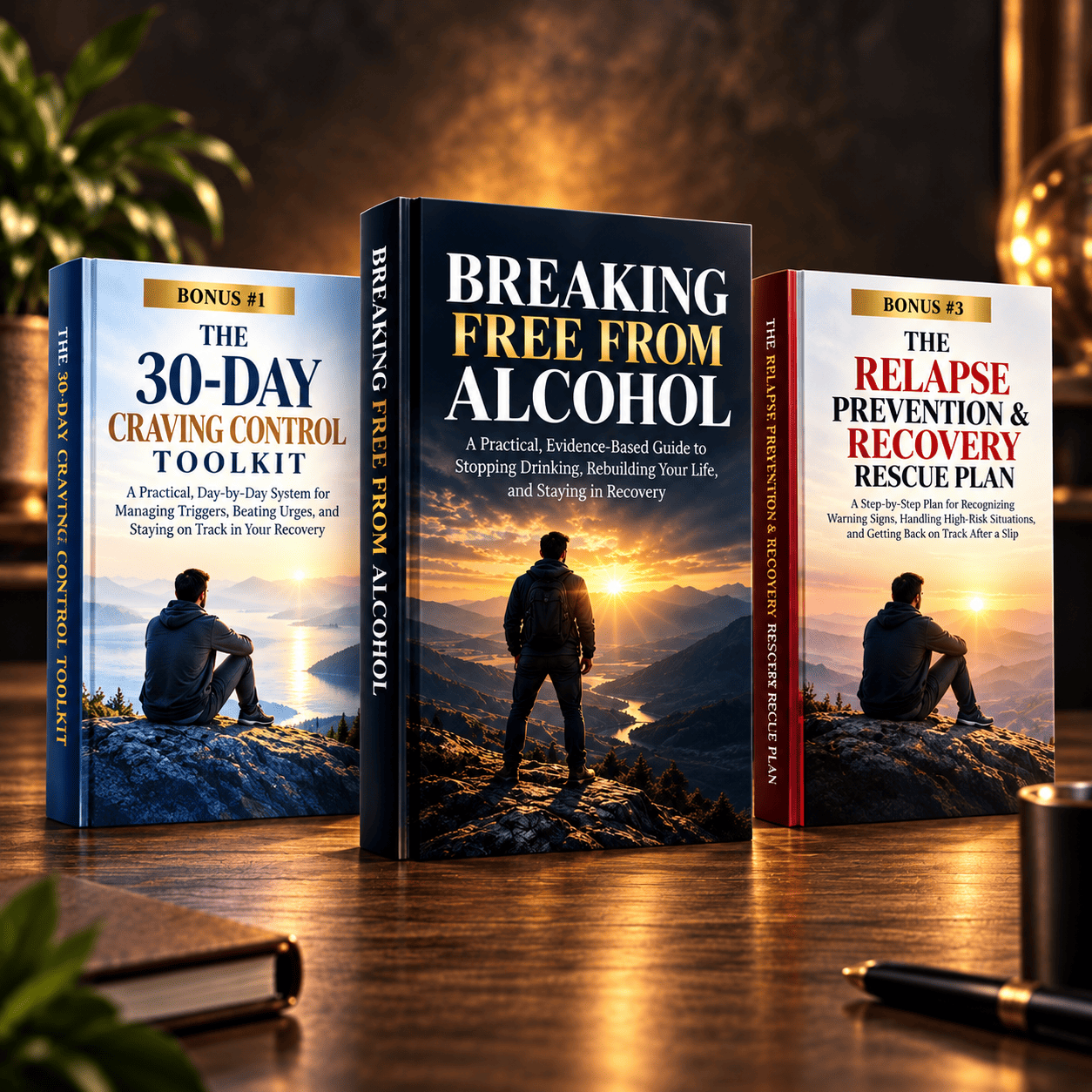
Introducing...
A practical health-education guide for people who want to stop letting alcohol control their routines, decisions and future.
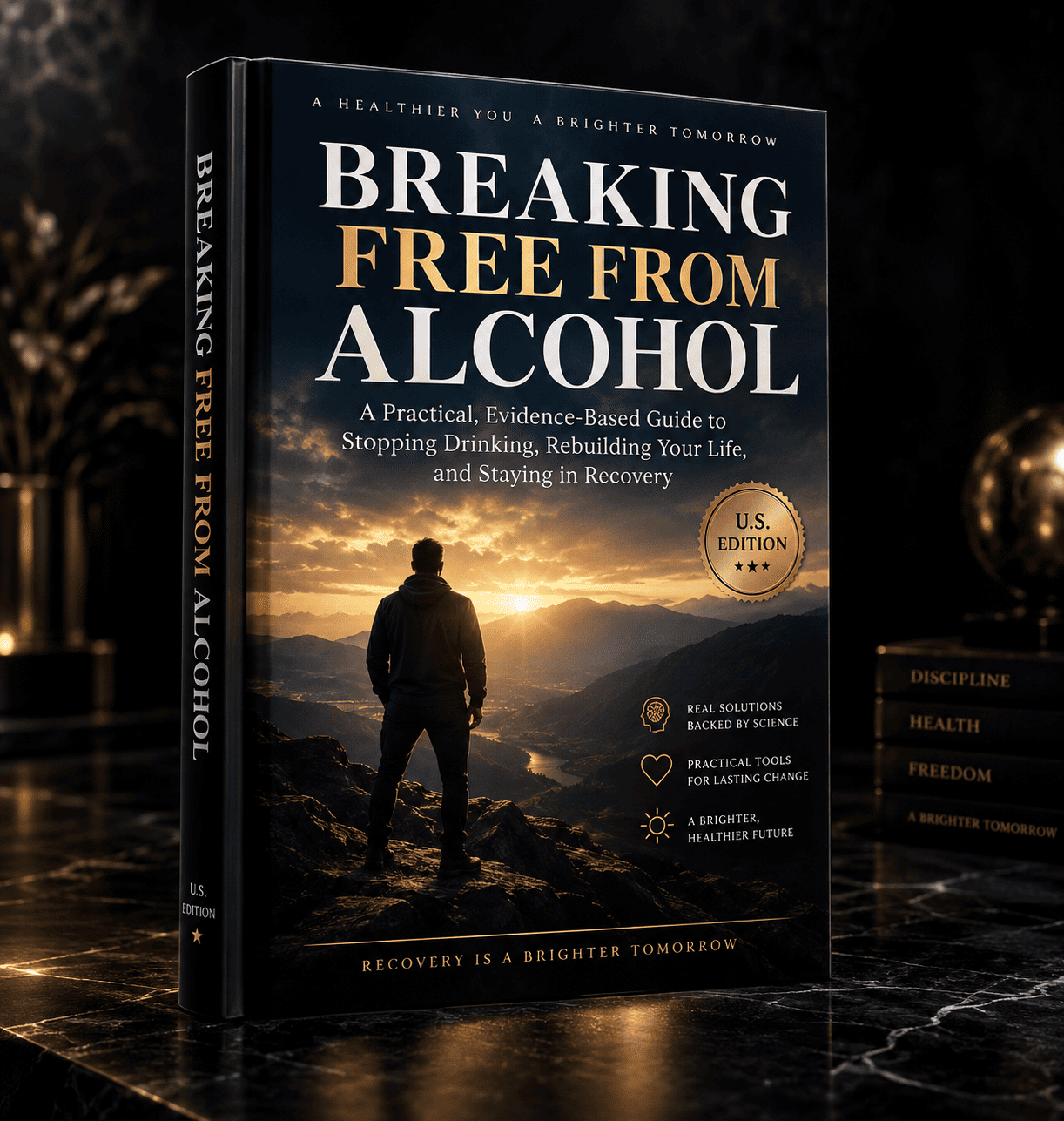
Inside this e-guide, you'll discover:
-
The Breakaway Protocol: Countering the 8 Relapse Traps — Pg. 6
Learn why repeatedly trying the same quitting strategy can keep producing the same result, and identify the traps that can quietly pull you back into old patterns. -
Willpower + Biological and Environmental Friction — Pg. 14
Instead of depending entirely on motivation, you'll learn how to build practical friction around the behaviours and situations that repeatedly lead you toward alcohol. -
Fixing the Internal Environment First — Pg. 21
Explore the emotional and psychological side of the drinking cycle and how stress, anxiety, loneliness and other triggers can influence behaviour. -
Re-engineering Your Peak Drinking Hours — Pg. 29
Learn how to map your most vulnerable period of the day and deliberately create a different routine around it. -
The Replacement Ritual System — Pg. 36
Discover how replacing the physical and behavioural routine around drinking can help make your environment less connected to alcohol. -
The Zero-Tolerance Threshold — Pg. 43
Explore the reasoning behind making a clear commitment rather than repeatedly negotiating with yourself about whether “just one” is acceptable. -
Your Recovery Momentum Tracker — Pg. 51
Use simple tracking tools to visualise progress, identify difficult periods and become more aware of the patterns affecting your recovery.
And the best part?
You don't need to keep guessing what to do every evening.
You don't need to depend entirely on motivation.
You don't need to pretend that cravings aren't happening.
The goal is to give you a practical framework you can use alongside appropriate professional support when needed.
According to the information provided for this offer, the framework has been shared with 500+ men. Individual experiences vary, and no recovery guide can guarantee the same outcome for everyone.
Real Recovery Experiences
The comments below are formatted as testimonial placeholders. Replace them with verified customer testimonials before publishing.
“The peak-hour section really opened my eyes. My difficult time was always after work. Once I started planning for that period instead of reacting to it, things became easier to manage.”
“This was different from the usual ‘just have willpower’ advice. It made me look at the whole pattern.”
“I liked that it doesn't pretend recovery is a magic overnight thing. It gave me a practical structure to follow.”
“The relapse section was the part I needed most. It helped me think about what I should do after a difficult day instead of assuming one bad moment means everything is finished.”
Share Your Experience
Just So You Know...
Putting These Guides Into an Easy-To-Read Format Represents Over $15,000 Worth of Professional Research Time.
The framework behind this resource required extensive research, organisation and preparation.
- Researching the behavioural and psychological principles behind alcohol dependence.
- Studying relapse patterns and recovery strategies.
- Organising the material into practical steps rather than scattered information.
- Developing exercises, tracking systems and practical routines.
- Editing and designing the material so it could be used without needing to read through complicated academic literature.
If you tried to recreate this entire body of work independently, including extensive research and professional consultation, the time and consulting cost could easily become substantial.
Using the cost estimate behind this offer, 150+ hours of research and consultation at approximately $100 per hour represents a potential value of more than $15,000.
But I'm Not Going To Charge You $15,000.
$15,000
$7,500
$3,750
Even $67
A fair price for access to this ready-to-use educational framework would be $67.
WAIT! I Have a FREE Gift For You...
If you're among the people who take advantage of the current offer, you'll also receive these bonuses alongside your package.
TODAY'S BONUS PACKAGE
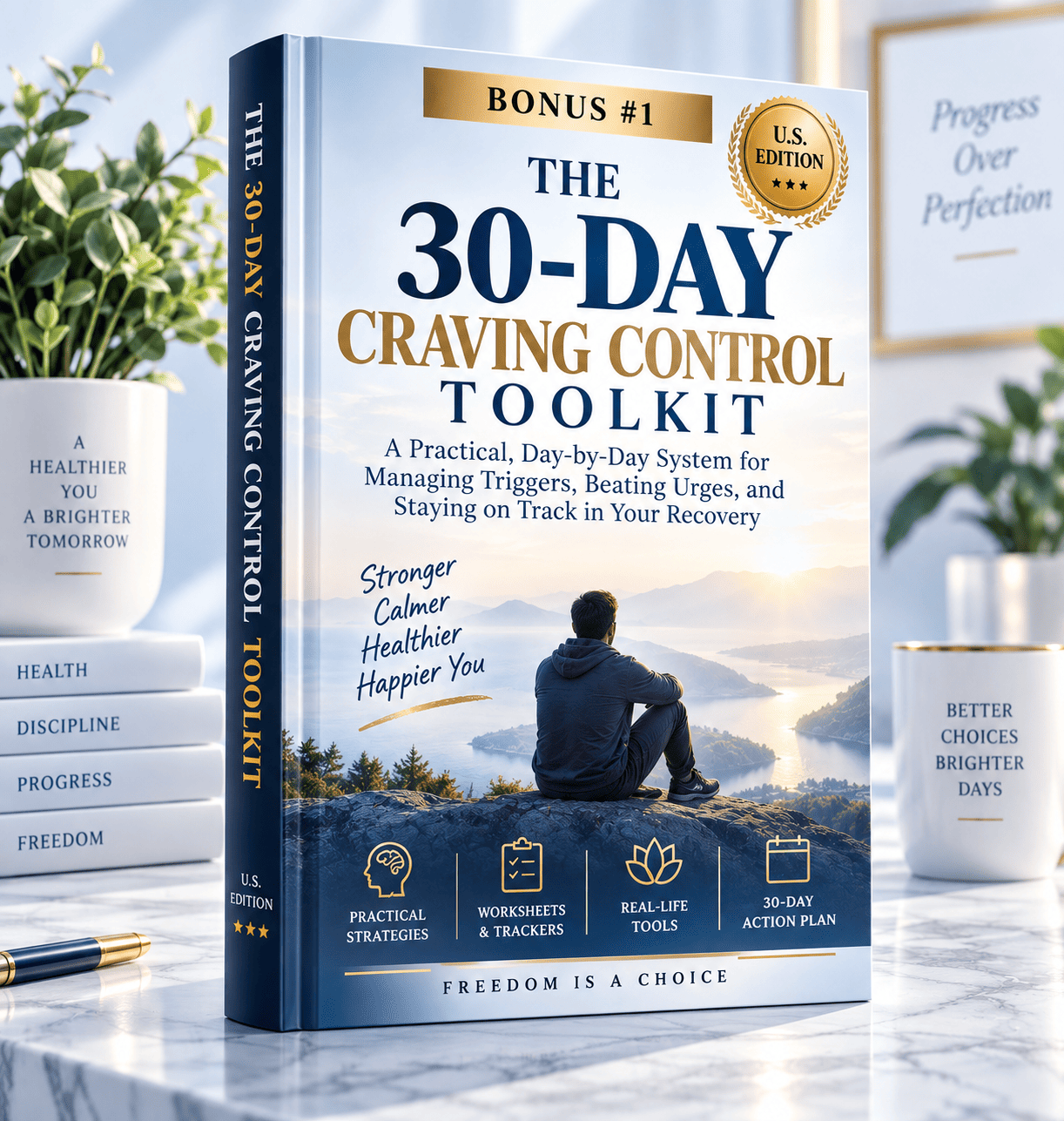
The 30-Day Craving Control Toolkit
A $20 Value — Yours Free Today.
Your daily emergency guide for the first month.
It includes practical craving-management exercises, peak-hour coping schedules and tracking logs designed to help you recognise difficult moments and respond deliberately.
The goal isn't to pretend cravings don't exist.
The goal is to help you have a plan for what you can do when they appear.
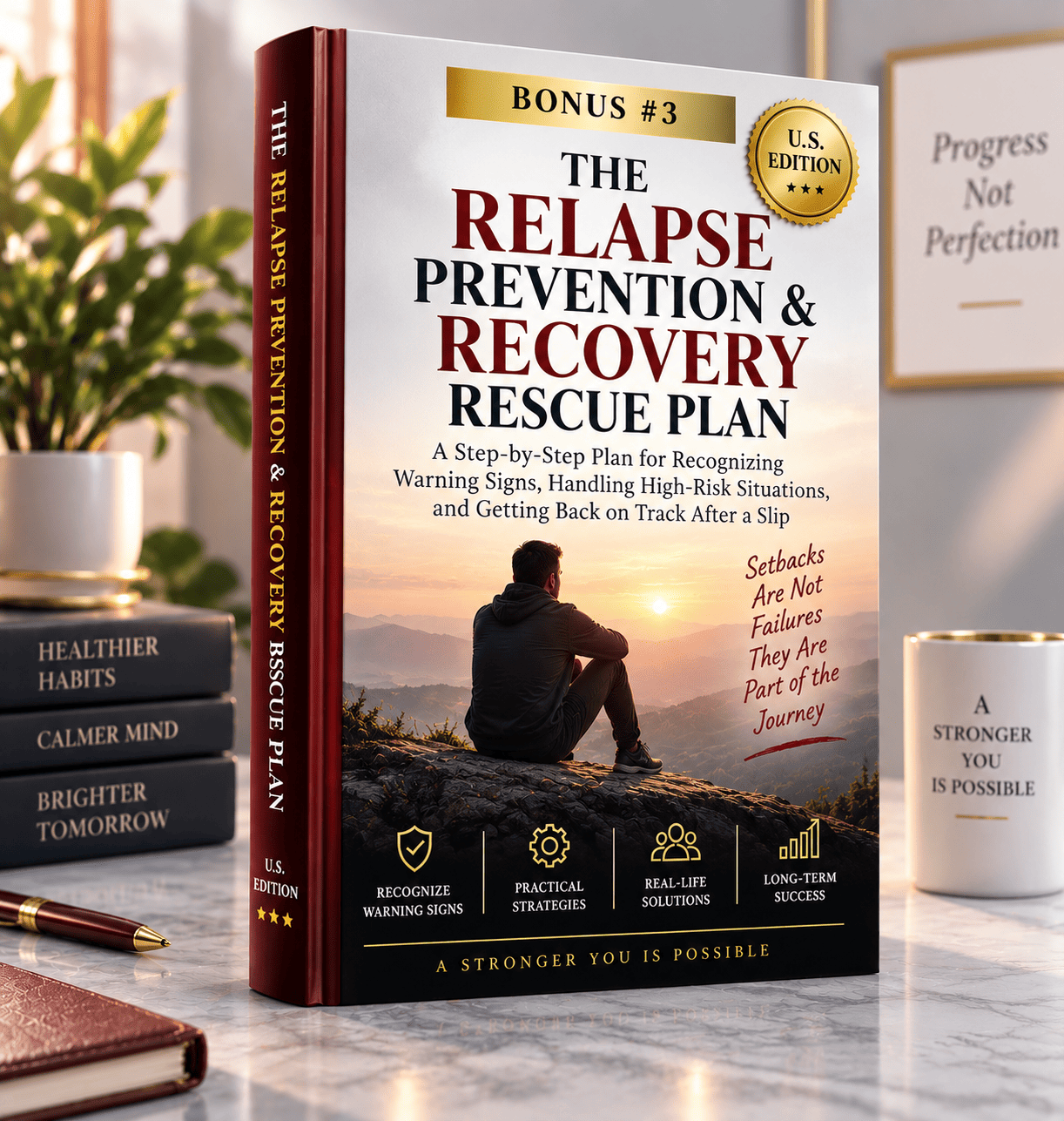
The Relapse Prevention & Recovery Rescue Plan
A $37 Value — Yours Free Today.
Never assume that one difficult moment means you have lost everything.
This roadmap helps you identify early warning signs, recognise high-risk situations and create a practical response plan if you experience a lapse.
Instead of allowing shame to turn one setback into a complete return to old habits, you'll have a structured way to stop, review what happened and reconnect with your recovery plan.
Recovery Guide Community · Example Interface
The current offer is available at $27 during the promotional window.
Bear in mind, you're not the only person who may be considering a recovery resource right now.
But don't let urgency replace good judgment. If you are physically dependent on alcohol, seek appropriate medical advice before suddenly stopping.
Still Feeling Unsure?
I totally understand.
Anything involving your health, your habits and your future deserves careful consideration.
Which is why I'm making this a simple, risk-free purchase.
You get a 30-day money-back guarantee.
Read the material.
Go through the framework.
Use the educational resources.
If you decide within the applicable 30-day guarantee period that the product isn't right for you, follow the refund process provided with your purchase.
No complicated explanation is necessary.
The goal is simple.
You should feel comfortable giving the material a fair look.
Important: This guarantee is for the digital product purchase. It is not a guarantee of sobriety, treatment success or a particular medical outcome.
More Recovery Stories
The comments below are testimonial placeholders. Replace with verified customer experiences before publishing.
“The biggest thing for me was seeing the pattern. I kept thinking my problem was the drink itself, but there were so many things happening before I reached for it.”
“I appreciated the practical exercises. I didn't want another lecture about addiction. I wanted something I could actually work through.”
“My hardest time was always after work. Planning around that window was one of the most useful ideas for me.”
“I stopped looking at one bad day as proof that I had failed completely. That changed my mindset.”
“Very straightforward. It helped me think about triggers, routines and what I was going to do when the craving showed up.”
The Choice Is Still Yours
OPTION 1:
Take action.
Get The Breaking Free From Alcohol Addiction.
Study the framework.
Start identifying your triggers.
Rebuild your vulnerable hours.
Prepare for cravings.
Build a recovery plan that doesn't depend entirely on willpower.
OPTION 2:
Close this page.
Keep trying the same approach.
Keep telling yourself you'll start next Monday.
Keep hoping that the next attempt will somehow be different without changing the pattern underneath it.
Maybe this page found you at exactly the right time.
Maybe it didn't.
Only you can decide what you do next.
The clock is ticking on the current $27 promotional price.
Important Health & Safety Information
This product is an educational resource and is not a substitute for medical diagnosis, treatment, psychotherapy, addiction treatment or emergency care.
Individual recovery experiences vary. No specific timeline, method, guide or product can guarantee sobriety or recovery from alcohol use disorder.
“I finally understood that my drinking wasn't only about the bottle. My evening routine was part of it too. The guide gave me things to work on instead of just telling myself to be stronger.”